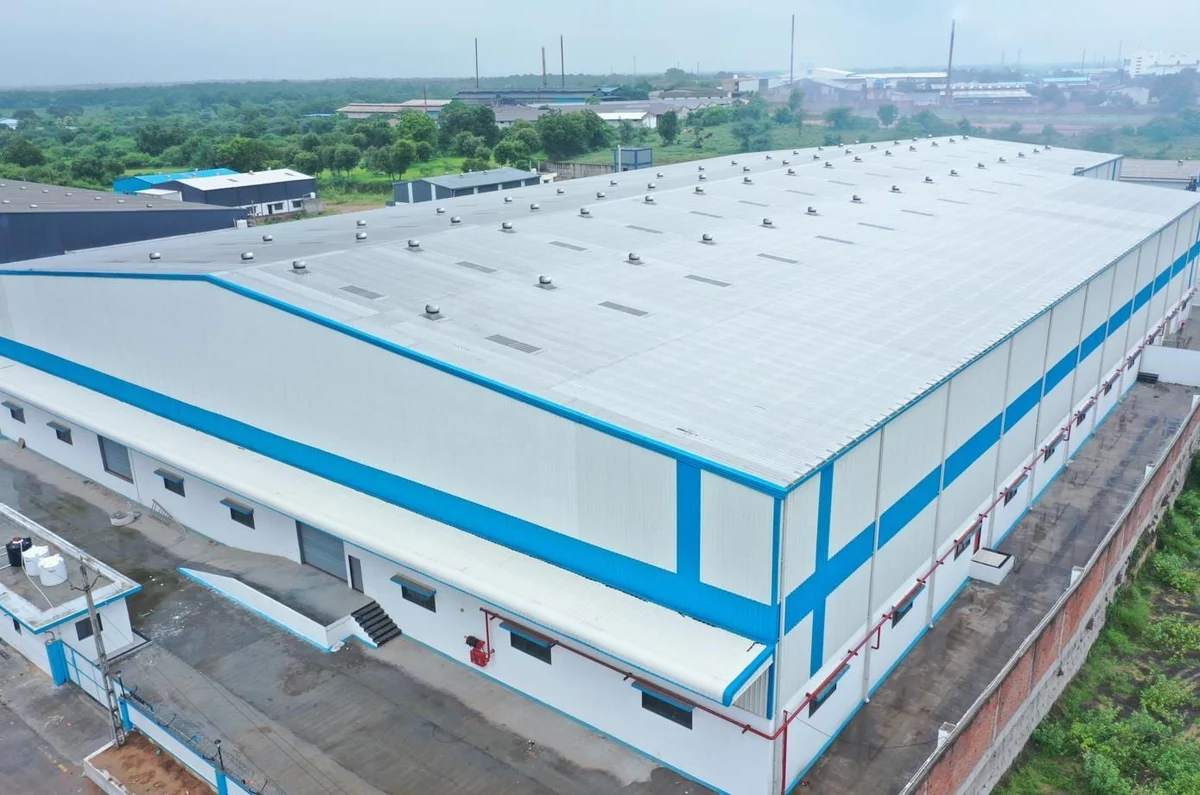
A PUF roofing sheet is a sandwich panel. Two metal skins enclose a core of rigid polyurethane foam, and the three layers bond into a single piece. The outer skin is usually profiled and colour-coated to shed water. The foam in the middle slows heat transfer. The inner skin gives a finished ceiling surface.
A plain profile sheet is a single layer of metal. It heats up fast in summer, drums loudly in rain, and drips condensation when warm, humid air meets a cold underside. A PUF panel handles all three problems in one installation step, and it often reduces the need for a separate false ceiling or insulation layer.
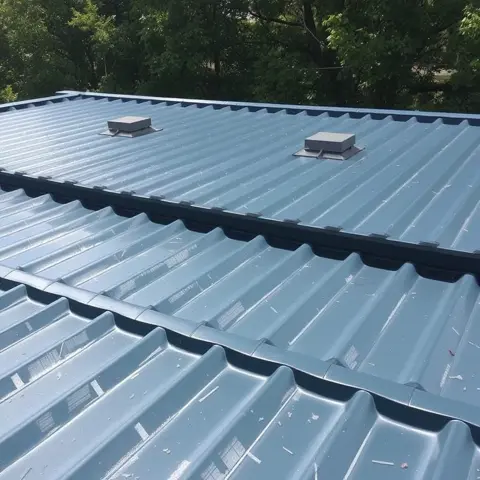
How Thick Should a PUF Roofing Sheet Be for a Factory Shed?
Thickness here means the foam core, not the metal. The table below is general industry guidance, not a confirmed specification of any one product. Final selection should follow your supplier’s load and insulation data.
| Foam thickness | Typical use in industrial buildings | What to consider |
|---|---|---|
| 30 mm | Dry storage, light assembly, sheds in moderate climates | Cuts heat and condensation, but offers a smaller thermal buffer in very hot regions |
| 40–50 mm | General manufacturing, packing, warehouses, workshops | A common middle ground between insulation and budget |
| 60 mm and above | Hot processes, air-conditioned production areas, temperature-sensitive goods | Better thermal control, with higher material cost and more roof load |
Think about what happens inside the shed. A fabrication unit with furnaces or heavy motors adds its own heat, so the roof has to resist the sun above and the process heat below. A garment packing unit with air conditioning wants the roof to hold the cooling it pays for. Neither case is decided by thickness alone.
Density and Metal Skin: The Specs Behind the Thickness
Two panels with the same foam thickness can behave very differently.
- Foam density. Manufacturers commonly quote around 40 kg/m³ for roofing and wall panels, and thermal conductivity in the range of roughly 0.024 to 0.03 W/m·K. Treat these as typical figures and ask for the actual test report for the panel you are buying.
- Metal skin thickness. A thin skin saves money but dents more easily during installation and while workers walk on the roof. It also affects how far the panel can span between purlins. For colour-coated roofing in general, one industry guide advises a base metal thickness of at least 0.45 mm for structural roofing, and 0.50 to 0.60 mm for longer spans or high wind loads.
- Skin material. Pre-painted galvanised iron (PPGI), aluminium and stainless steel are all used as facings for PUF panels. Ask which one is used and on which face.
Coating: What the Outer Skin Has to Survive
Coating decides how long the roof keeps its colour, resists chalking and holds off rust. The right choice depends on where the factory stands, not how it looks on a brochure.
| Coating / base | Best suited to | Trade-off |
|---|---|---|
| PPGI with standard polyester | Inland sites with mild conditions | Lowest cost, but the shortest colour retention in harsh sun |
| SMP or high-durability polyester | Hot, sunny regions | Harder surface and better fade resistance, at a moderate premium |
| PVDF topcoat | Coastal air, industrial pollution, chemical fumes | Premium coating with the strongest UV and salt resistance |
| PPGL (aluminium-zinc) base | Coastal and high-humidity locations | Better corrosion resistance than a zinc base; usually paired with HDP or PVDF |
Also ask about the inner-face coating. In a food unit, a chemical store or a humid process area, the underside of the roof lives in a tougher environment than most buyers expect.
What Affects the Cost of PUF Roofing for a Factory Shed?
PUF roofing is priced per square metre, but that figure moves with several things. Compare quotes only when they are built on the same specification.
- Foam thickness and density
- Metal skin thickness, type and coating system
- Panel length, since long roof runs need custom cutting and careful transport
- Accessories such as ridge caps, flashings, gutters, fasteners and skylights
- Total roof area, because minimum order quantities and batch pricing apply
- Installation, transport and site access
- Structural savings: lighter, self-supporting panels can sometimes reduce purlin and framing needs
Listed prices on Kian’s product pages are approximate and vary by listing, so the sensible route is a written quote against your own drawing and specification. PUF insulated roofing panels are shown there in 30 mm, 40 mm and 50 mm options, and most listings carry a minimum order of 150 square metres.
PUF Roofing Sheet vs Plain Colour-Coated Sheet
| Factor | PUF insulated roofing | Plain colour-coated profile sheet |
|---|---|---|
| Heat gain | Reduced by the foam core | High; the sheet heats up quickly |
| Condensation | Much less on the underside | Common in humid weather |
| Rain noise | Dampened | Loud |
| Upfront cost | Higher | Lower |
| Best for | Occupied, climate-sensitive or noise-sensitive buildings | Open sheds and low-cost covering |
If your budget is tight and the shed is open or lightly used, a plain colour-coated profile roofing sheet may be enough. Kian’s page lists a 0.50 mm cold-rolled galvanised iron sheet in white. For a shed where people work under the roof all day, the extra cost of insulation usually pays back in comfort and lower cooling load.
Fire Behaviour: Where PUF Needs a Second Look
Polyurethane foam is an organic material, so fire performance depends on the foam formulation and the test results behind it. Kian’s product pages describe the panels as fire resistant. Before you rely on that for a factory with hot work, paint booths or flammable stock, ask for the fire test report that matches your local requirements. In high fire-risk zones, Rockwool insulated panels are worth comparing. Kian lists a 50 mm wall panel version.
Installation Points That Protect the Roof
- Purlin spacing. It should follow the panel’s span data, not habit from older sheet roofs.
- Joints and fasteners. Overlaps and sealing carry the water-tightness of the whole roof. Poor sealing causes most leaks.
- Walking loads. Use crawl boards during installation and maintenance to avoid denting the skin.
- Experienced crews. Kian also lists a PUF panel installation service. Confirm what the scope covers before you rely on it.
Checklist Before You Ask for a Quotation
- Roof area, length of slope and purlin spacing
- Site location and climate: inland, coastal, hot, humid or polluted
- Process heat and any air-conditioned zones inside
- Preferred foam thickness, or the temperature you want inside
- Metal skin material, thickness and coating on both faces
- Foam density and the test reports available
- Fire requirements for your building category
- Colour, accessories, skylights and rainwater arrangements
- Whether you need supply only or supply with installation
FAQ Section
Frequently Asked Questions
What thickness of PUF roofing sheet is best for a factory shed?
For most general-purpose industrial sheds, 30 mm to 50 mm of foam is a common starting range. Sheds with hot processes, air conditioning or temperature-sensitive stock usually need thicker panels. The right figure depends on your climate, process heat and the span between purlins.
Is a PUF roofing sheet better than a normal colour-coated roofing sheet?
For insulation, yes. PUF panels reduce heat gain, condensation and rain noise. A plain colour-coated sheet costs less and suits open or lightly used sheds, but it does not insulate.
What does the cost of PUF roofing depend on?
Foam thickness and density, metal skin thickness and coating, panel length, accessories, total area, installation and transport all affect the price. Compare quotes only when they list the same specification.
Which coating is best for a PUF roofing sheet in a coastal or polluted area?
A PVDF topcoat on an aluminium-zinc (PPGL) base is generally recommended for coastal, humid or chemically polluted sites. Standard polyester on a PPGI base is usually adequate inland.
Are PUF roofing panels fire resistant?
Fire behaviour depends on the foam formulation and the tests it has passed. Ask the supplier for the fire test report and check it against your local building and insurance requirements. For high fire-risk buildings, compare Rockwool panels as well.
What is the minimum order for PUF roofing panels at Kian?
Most PUF roofing listings on Kian’s website show a minimum order of 150 square metres. Confirm the current quantity, specification and availability directly with the team.
Plan Your Factory Roof With Kian Container And Prefab Solutions
The right PUF roof balances foam thickness, metal skin, coating and span against your site and budget. If you are comparing options, start with the PUF roofing sheets and the sandwich PUF panel range on Kian’s website. If you also need insulated walls for the same building, see the PUF insulated wall panels. Then contact Kian Container And Prefab Solutions with your roof size, location and usage. The team can help you shortlist a specification and request a quotation.